
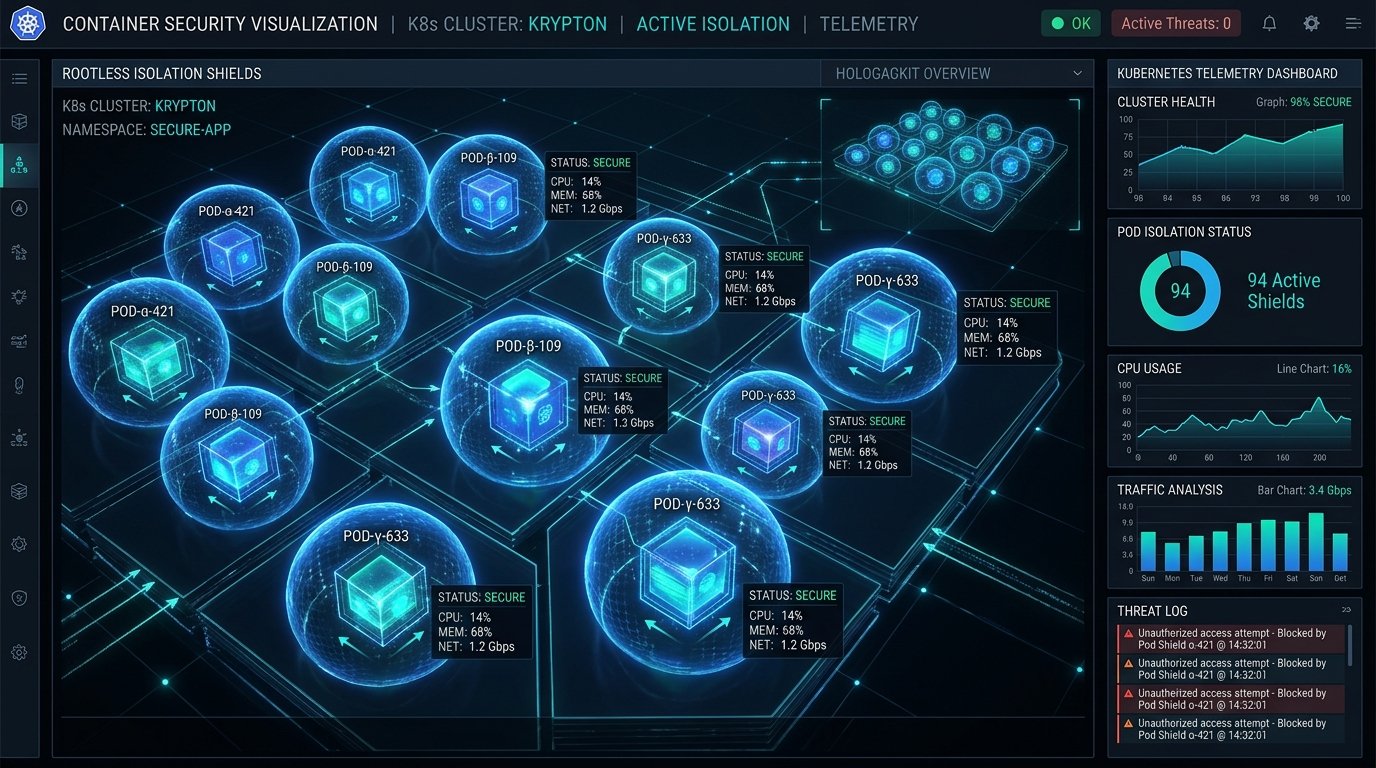
Containerization has been the foundation of software delivery for over a decade. However, the centralized daemon model introduced by early container engines poses significant security vulnerabilities in modern zero-trust cloud infrastructure.
Podman 5 and Docker 26 both now offer rootless operating modes, but their underlying process management models differ drastically. This article evaluates both engines across security, developer experience, and CI/CD pipeline integration.
Table of Contents
1. Daemon Architecture vs Daemonless
Docker relies on a central background service (`dockerd`) running with root privileges to manage containers, networks, and storage volumes. If an attacker gains access to the Docker socket (`/var/run/docker.sock`), they effectively gain root access to the host host OS. Podman, by contrast, operates on a fork/exec model where container processes are direct child processes of the invoking user shell.
2. Rootless Execution & Security Boundaries
Rootless Podman leverages user namespaces to map container user IDs (`UID 0`) to unprivileged user ranges on the host kernel (`UID 100000+`). Even if a container breakout vulnerability occurs inside a container, the escaping process has zero privileges on the host server system.
3. Migration & CLI Compatibility
Migrating from Docker to Podman requires minimal friction due to alias parity. You can define a shell alias `alias docker=podman` for 95% of standard commands. For Compose setups, `podman-compose` or native Podman pods allow defining multi-container environments using standard `docker-compose.yml` specifications.
Frequently Asked Questions
Can Podman run existing Docker images from Docker Hub?
Yes. Podman natively pulls and runs OCI-compliant container images from Docker Hub, GitHub Container Registry, Quay.io, and private registries without modification.
Does Podman support Docker Desktop GUI extensions?
Podman offers 'Podman Desktop', a free open-source GUI desktop application that provides graphical container management, Pod creation, and Kubernetes cluster inspection.